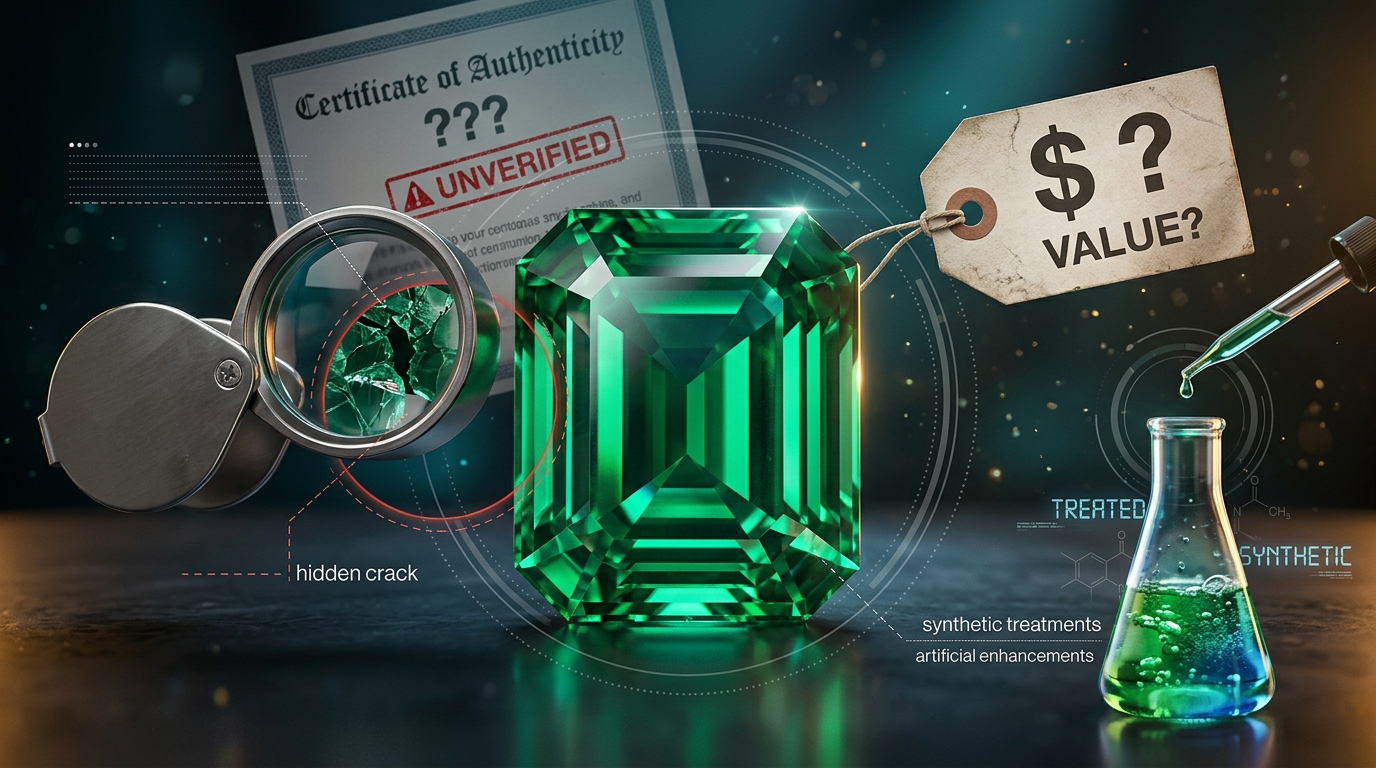
Buying a gemstone should feel exciting, not terrifying. But the reality is that the gemstone market has a trust problem that refuses to go away. Every year, thousands of buyers lose money to deceptive practices that range from slightly shady to outright criminal. The worst part? Most victims do not realize they have been scammed until months or even years later — usually when they try to sell the stone, clean it, or get it appraised. This article breaks down the five most common gemstone scams, explains exactly how they work, and gives you practical steps to avoid them. Whether you are buying a $300 amethyst or a $30,000 ruby, these lessons apply. The goal is simple: help you buy with confidence and never become a statistic.
Undisclosed Treatments and Enhancements
This is the single biggest scam in the gemstone industry, accounting for 38% of all consumer pain points. Here is how it works: a stone undergoes a treatment that improves its appearance or durability, but the seller does not tell you. Common treatments include heat treatment, fracture filling, glass filling, oiling, and dyeing. Heat treatment is actually acceptable and common for sapphires and rubies. Most buyers accept it. But when a seller hides it and charges unheated prices, that is fraud. The real danger comes from fracture filling and glass filling. Lead-glass filled rubies are widely sold in commercial retail as "composite rubies." They look stunning in the display case. Then you take your ring for routine ultrasonic cleaning, and the stone disintegrates into worthless glass fragments. The value is gone. The investment is gone. How to avoid it: Demand full disclosure in writing. A legitimate report will use codes like N for Natural, H for Heat, F for Filled, and U for Unheated. If the seller cannot or will not provide this, walk away. No exceptions. Ask directly: "Has this stone been treated in any way?" Get the answer on your invoice.
Fake or Unaccredited Certification
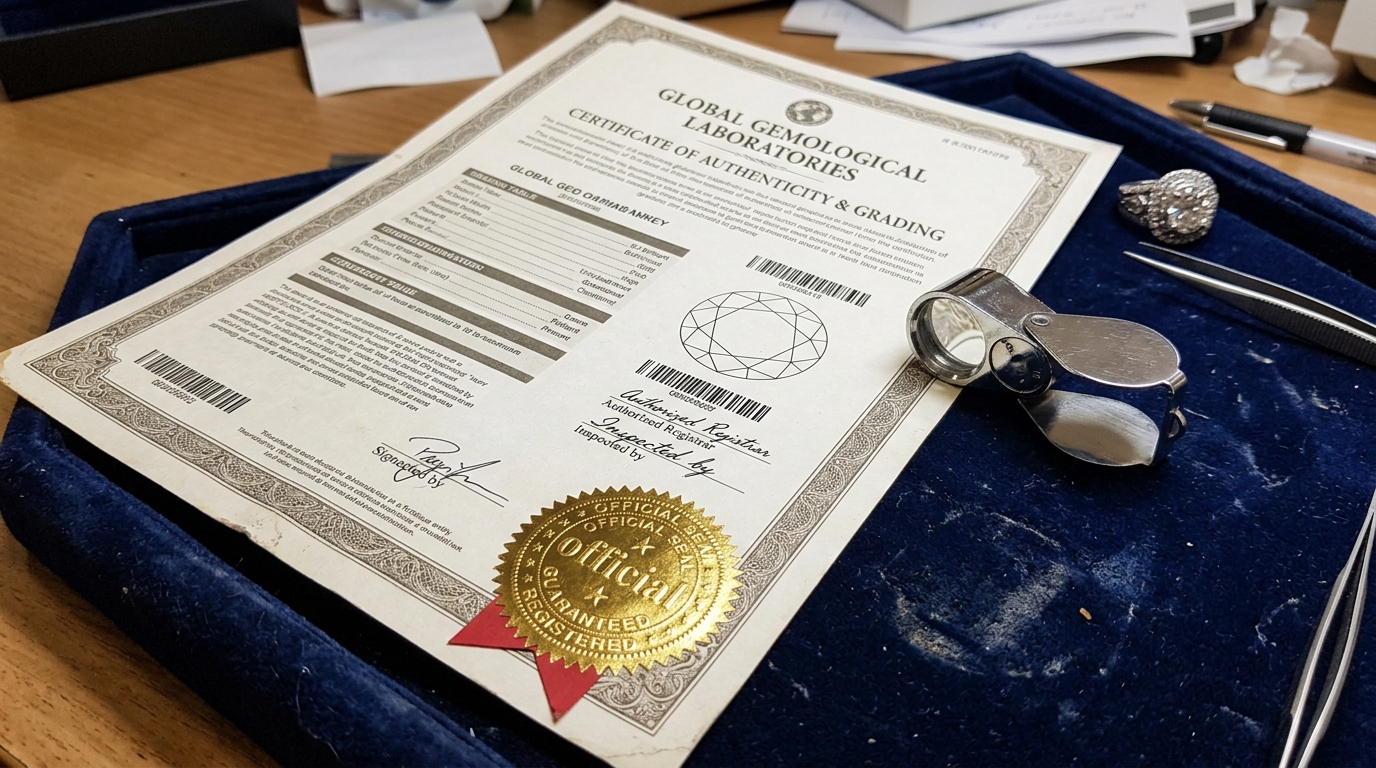
This scam accounts for 28% of complaints and is especially dangerous because it weaponizes trust. A buyer sees a certificate and assumes the stone is legitimate. But fake certificates are everywhere. Some are entirely fabricated. Others come from "in-house labs" run by the dealer themselves. A few are real certificates paired with a different, lower-quality stone. The fraud works because most buyers do not know how to verify a report independently. They see a fancy document with a hologram and a report number and assume it is real. They never check the issuing laboratory's official database. They never confirm that the stone in their hand matches the description on the paper. How to avoid it: Only trust reports from reputable laboratories. Then take the extra step: manually type the lab's official website into your browser and enter the report number. Do not scan the QR code on the certificate — it may link to a fake mirror site. If the report number does not exist, or the details do not match the stone, the certificate is fake. Stop the purchase immediately.
Synthetic Stones Sold as Natural
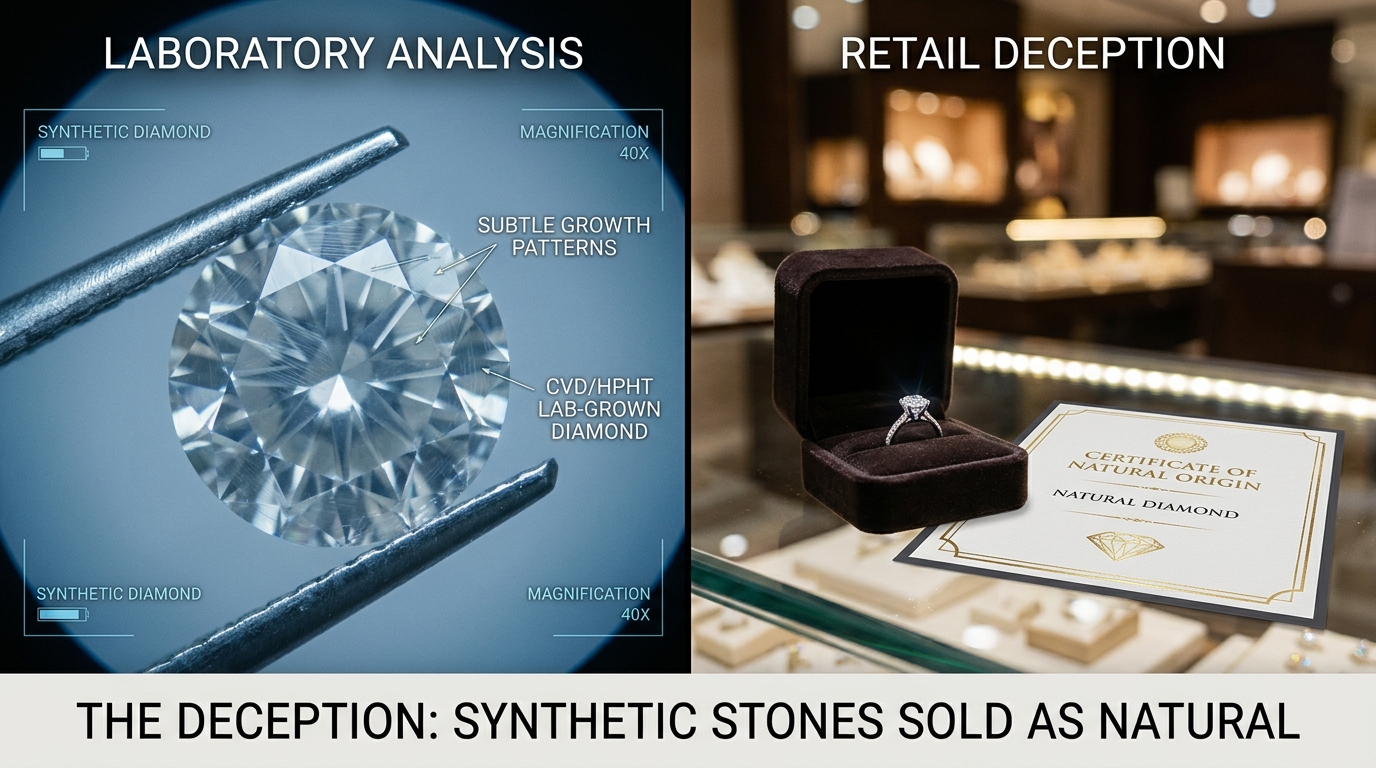
This scam accounts for 18% of complaints and is growing fast. Lab-grown gemstones are not inherently bad. They are affordable, ethical, and visually identical to natural stones in many cases. The problem is when a seller claims a synthetic stone is natural and charges natural prices. The two most common methods are flame-fusion and hydrothermal synthesis. Flame-fusion rubies and sapphires are cheap to produce and often sold as natural in tourist markets and online marketplaces. Hydrothermal emeralds can look remarkably convincing. For metaphysical buyers, the stakes are even higher — many believe synthetic stones carry no astrological efficacy. For investors, the loss is total. A synthetic stone has almost no resale value compared to a natural one. How to avoid it: Look for standardized terminology. The FTC requires lab-grown stones to be labeled as "Laboratory-Created" or "Laboratory-Grown." If a seller avoids these terms or claims a stone is "natural" without a verifiable certificate from an accredited lab, be suspicious. Inclusions can also tell the story — natural stones have unique internal characteristics that synthetics often lack. When in doubt, get an independent appraisal before purchase.
Pricing Opacity and Overcharging
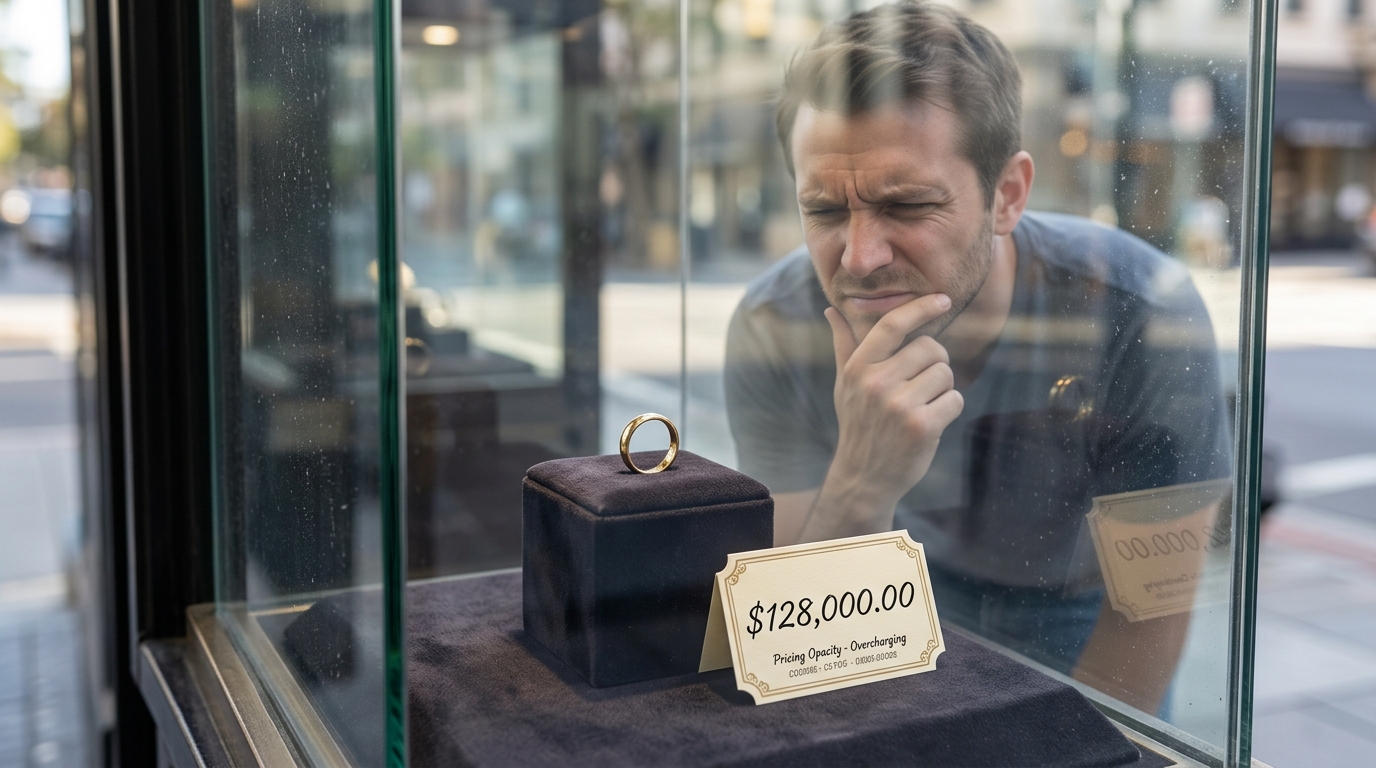
This scam accounts for 16% of complaints and is often the hardest to detect because there is no single "fair price" for most gemstones. Pricing depends on color, clarity, cut, carat weight, origin, and treatment status. Unscrupulous sellers exploit this ambiguity to charge two, three, or even ten times what a stone is worth. The internet has made this worse in some ways. Buyers search for "ruby price per carat" and find wildly conflicting numbers. They search for "sapphire worth" and get answers that range from $50 to $50,000. Without a trusted baseline, they either overpay or walk away from good deals because they cannot tell the difference. How to avoid it: Use multiple sources to establish a price range. Compare similar stones across reputable dealers. Look for transparent pricing that explains why a stone costs what it costs. Most importantly, insist on at least 7-day money-back return agreement contingent.
Inappropriate Wear and Damage
This is less of a scam and more of a dangerous oversight, but it belongs on this list because it destroys value just as effectively. Low-hardness gemstones like opal, pearl, fluorite, and emerald are sometimes mounted in high-impact engagement rings or daily-wear jewelry. They chip, crack, lose their luster, and fracture permanently. The scam element comes in when sellers fail to warn buyers. A seller who knows a stone is too soft for daily wear but says nothing is not doing you a favor. They are setting you up for heartbreak and financial loss. Search trends show high query rates for "can opal ring get wet" and "how to clean emerald" — evidence that buyers are learning these lessons the hard way. How to avoid it: Use the Mohs hardness scale as your guide. For daily-wear rings, choose stones with a hardness of 7.5 or higher. Diamond, sapphire, and ruby are safe. Emerald is risky. Opal and pearl are for occasional wear only. Ask your seller directly: "Is this stone suitable for everyday wear?" If they hesitate, believe them.
Conclusion
Gemstone scams thrive on ignorance and urgency. Sellers count on buyers not knowing how to verify a certificate, not understanding treatment disclosures, and not asking the right questions. The five scams covered here — undisclosed treatments, fake certification, synthetic misrepresentation, pricing opacity, and inappropriate wear — account for the vast majority of consumer losses in the gemstone market. The good news is that every single one of them is preventable. Verify every certificate on the issuing lab's official website. Demand full treatment disclosure in writing. Insist on standardized terminology for lab-grown stones. Compare prices across multiple sources. Match the stone's hardness to its intended use. And always, always secure a written 14-day return agreement contingent on independent appraisal. Trust is not given in this market. It is verified. Do the work before you buy, and you will never become another statistic.
Questions Readers Often Ask
Is heat treatment a scam?
No. Heat treatment is a common and widely accepted practice for sapphires and rubies. It improves color and clarity and is disclosed on legitimate certificates. The scam is not heat treatment itself — it is hiding it and charging unheated prices. Always confirm the treatment status on the certificate and on your invoice.
How can I tell if a gemstone is synthetic without a lab?
You cannot reliably tell with the naked eye. Some synthetics have distinctive inclusions under magnification, but many do not. The only trustworthy method is a report from an accredited laboratory .Do not rely on home tests, UV lights, or advice from the seller. If you cannot verify it independently, do not buy it.
What is the safest way to buy a gemstone online?
Buy from sellers who provide verifiable certificates from accredited labs, offer a 7-day or more money-back return policy contingent on independent appraisal, and disclose all treatments in writing. Cross-check the certificate number on the lab's official website before purchasing. Pay with a method that offers buyer protection, such as a credit card or PayPal. And always get an independent appraisal after purchase if the stone is valuable.
Interested in our gemstones?
View Our Collection →Have a stone you want to check yourself?
Use our free gemology tools to identify, weigh, and care for gemstones.
Explore Free Gemstone Tools →