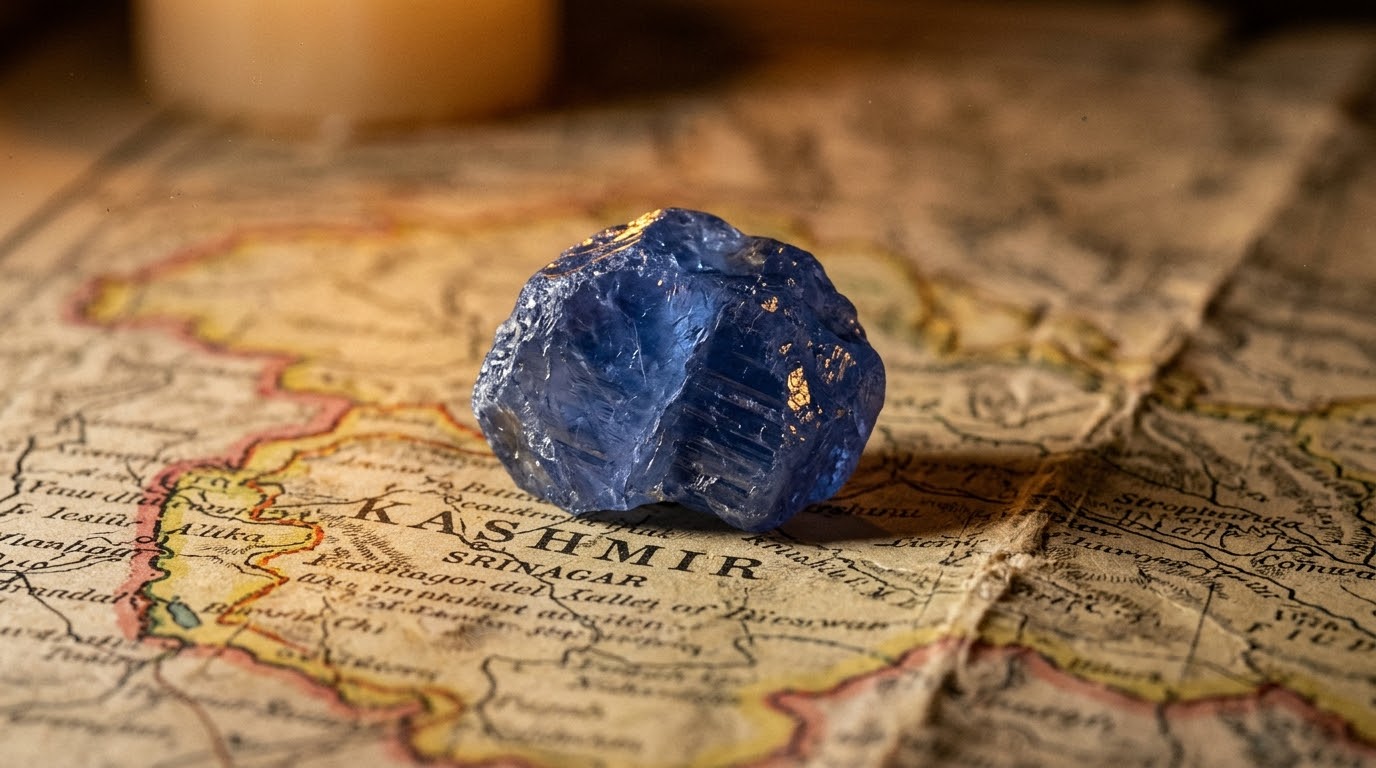
The Kashmir sapphire mines experienced a brief but legendary golden age between 1881 and 1887. A landslide high in the Paddar Valley exposed exceptional cornflower-blue crystals. Under the Maharaja’s control, miners worked only a few summer months each year at extreme altitude. By 1887 the richest pockets were exhausted, leaving behind stones that are still considered the finest blue sapphires ever found.
The Chance Discovery (1881–1882)
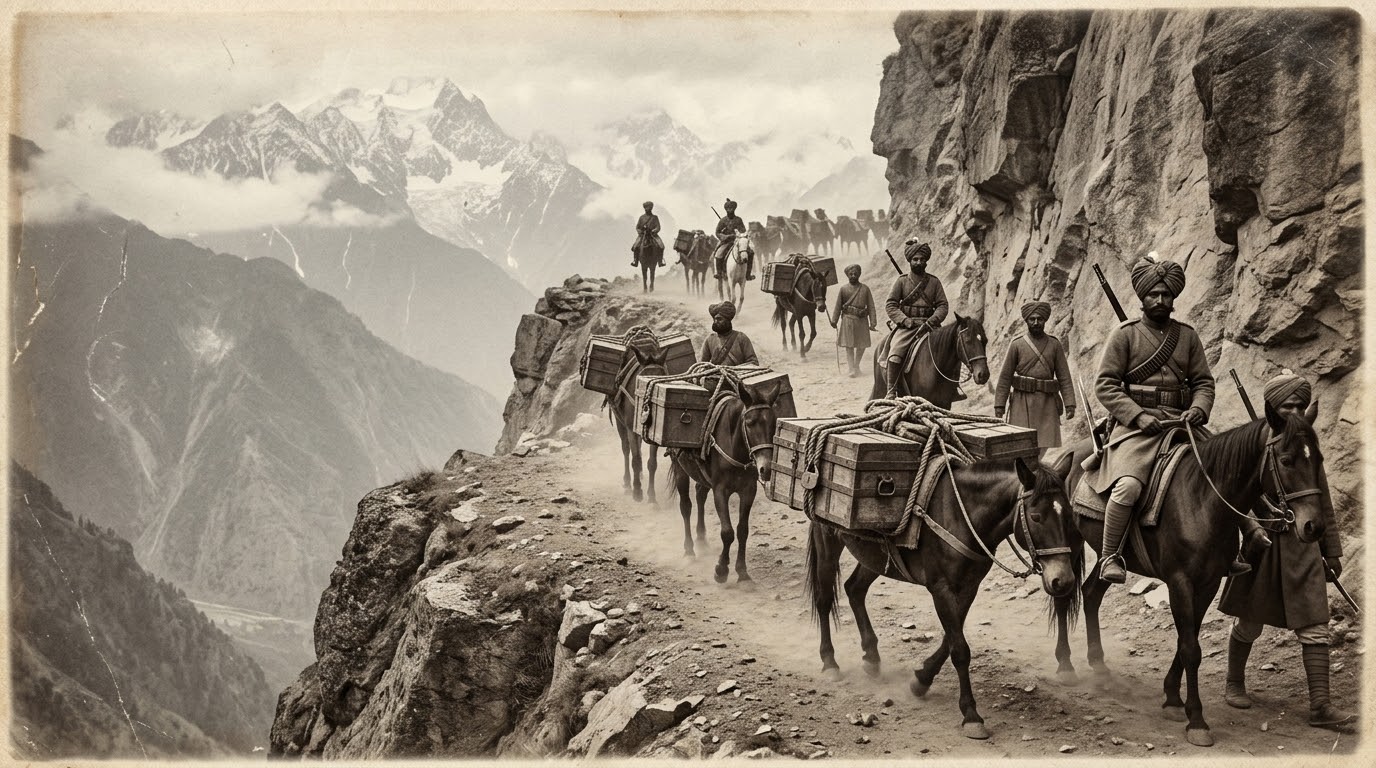
In the remote Paddar Valley of the Zanskar Range, at an altitude of around 4,500–4,600 metres, a landslide exposed a vein of blue crystals embedded in altered pegmatite. Local villagers and traders from neighbouring valleys initially collected the stones and exchanged them for salt or goods. When the crystals reached markets in Simla and Kulu, their true value was recognised. News travelled quickly, and by late 1882 jewellery syndicates were already paying substantial sums for fine material. The Maharaja of Kashmir soon claimed ownership of the deposit and sent troops to secure the site.
The Golden Years (1882–1887)
This short window is known as the golden age of Kashmir sapphires. Mining was possible only during the brief summer months when snow melted. Workers used simple hand tools in harsh conditions to extract crystals from the “Old Mine.” Some crystals measured up to 12 cm long. Production was never large by modern standards, but the quality was extraordinary — rich, velvety cornflower blue with a soft, luminous character caused by fine silk inclusions. Almost all of the finest Kashmir sapphires known today come from this six-year period.
Exhaustion and Decline
By 1887–1888 the richest pockets of the Old Mine were largely worked out. Attempts to create new landslides or open nearby sites yielded far fewer high-quality stones. Official mining slowed dramatically. Later efforts in the early 1900s and 1920s recovered mostly lower-grade material. After 1927 significant production effectively ended. The combination of extreme altitude, short working season, and rapid exhaustion of the best veins meant the golden age could never be repeated.
Legacy of a Short Golden Age
Because the finest material was mined for only a handful of seasons more than a century ago, genuine Kashmir sapphires are exceptionally rare. Their distinctive soft, velvety blue remains the benchmark against which other sapphires are judged. The mines themselves remain remote, high, and largely inactive, adding to the almost mythical status of the stones that came from them. Today any fine Kashmir sapphire carries not only beauty but a story of one of the shortest and most celebrated chapters in gem mining history.
Questions Readers Often Ask
Why was the golden age of Kashmir sapphire mining so short?
The richest deposit (the Old Mine) was a relatively small, concentrated pocket exposed by a landslide. Once that pocket was exhausted around 1887–1888, further mining produced far fewer fine stones. The extreme altitude also limited work to only a few months each year.
Where exactly were the Kashmir sapphire mines located?
They were situated near the village of Sumjam (Soomjam) in the Paddar Valley of the Zanskar Range, in what is now the Kishtwar district of Jammu and Kashmir, India, at elevations around 4,500–4,600 metres.
Why are Kashmir sapphires still considered the finest in the world?
They combine a rich, saturated cornflower-blue colour with a unique soft, velvety appearance caused by fine silk inclusions. Because almost all top-quality stones were mined in just a few years in the 1880s, genuine examples remain extremely rare and highly prized.
Featured Products


Interested in our gemstones?
View Our Collection →Have a stone you want to check yourself?
Use our free gemology tools to identify, weigh, and care for gemstones.
Explore Free Gemstone Tools →