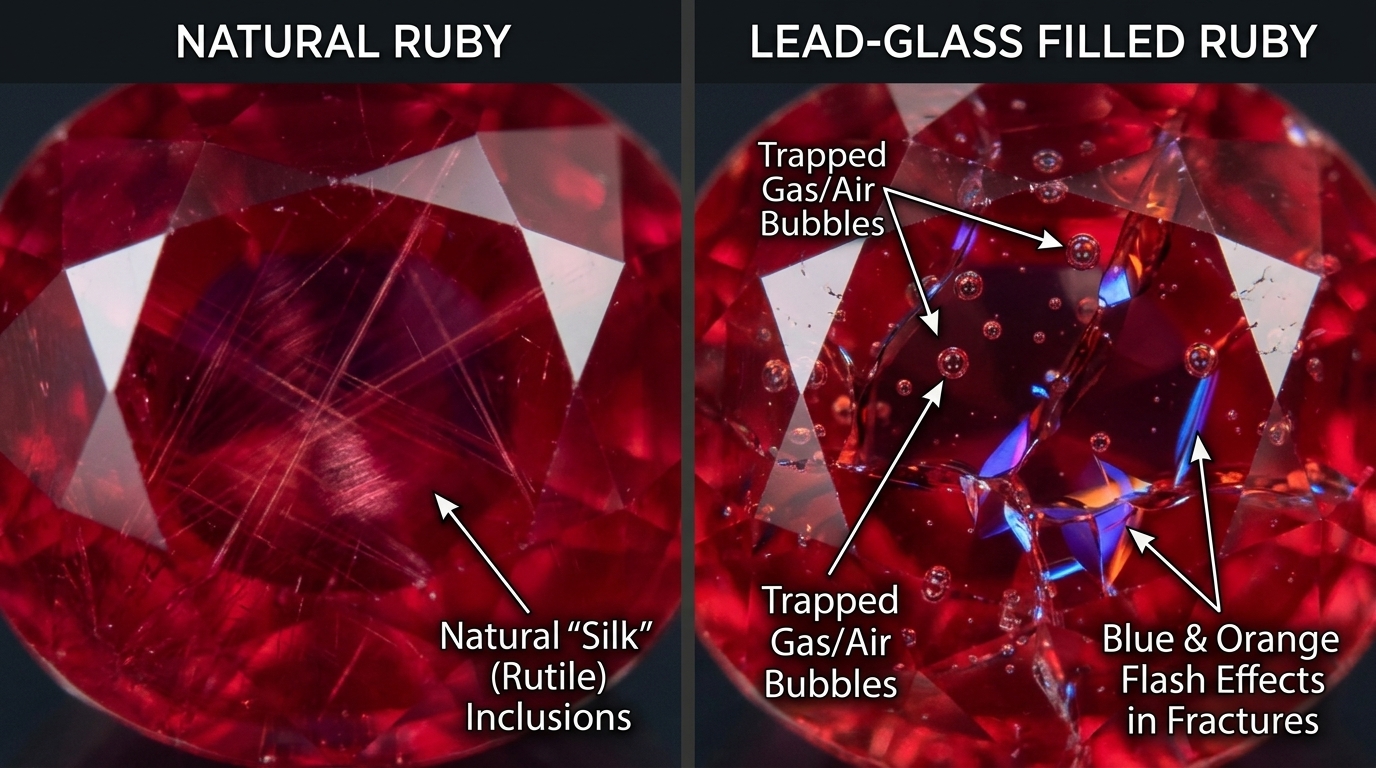
Lead-glass filled rubies are low-grade fractured natural corundum filled with soft lead glass to look clear and red. They are composites, not solid rubies. Fragile, easily damaged by heat or cleaners, and worth only a few dollars to tens of dollars per carat. Most have almost no real value or resale potential.
What Are Lead-Glass Filled Rubies and How Are They Made?
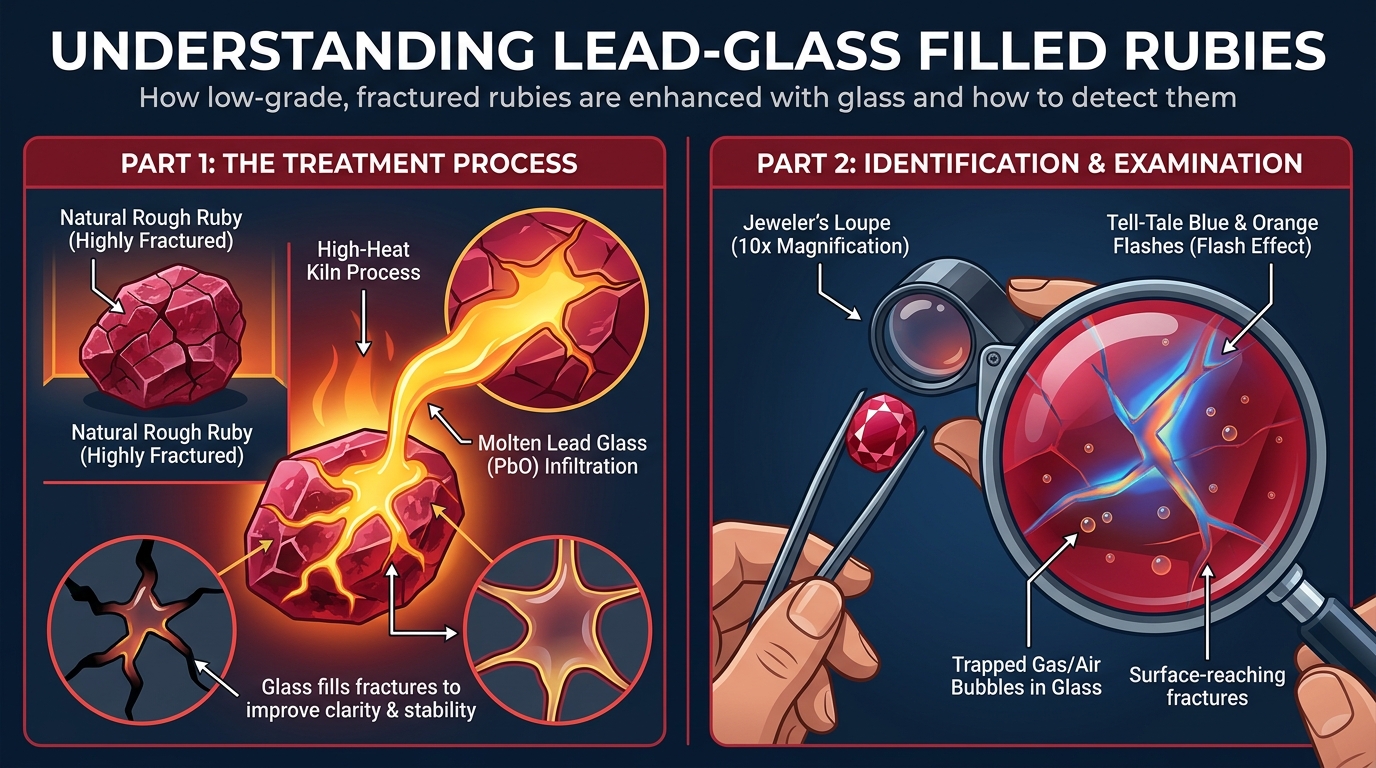
Most people who buy a ruby expect a hard, durable natural stone that will last for years. What many end up with is something quite different. Lead-glass filled rubies begin as natural corundum, the same mineral family as ruby and sapphire. The difference is quality. The starting material is usually heavily fractured, cloudy, or nearly opaque rough that would be almost worthless if left alone. Much of this low-grade material has come from places like Madagascar, parts of Africa, and other sources over the years. The treatment process is straightforward but dramatic. The rough is cleaned, often with acid, to open the cracks. Then it is heated with a special glass that contains a high amount of lead oxide. Temperatures around 900 to 1000 degrees Celsius melt the glass so it flows into every fracture by capillary action. Sometimes the process is repeated. When the glass cools and hardens, the cracks become much less visible because the refractive index of the lead glass is close to that of the ruby. Light passes through more evenly, so the stone looks clearer and the color appears richer. The result is not a treated ruby in the usual sense. Heat treatment of good material is common and accepted. It improves color and clarity without adding a foreign substance. Lead-glass filling adds a large amount of glass. In heavily treated stones the glass can make up a meaningful portion of the total volume, sometimes estimated at 30 percent or more. That is why major laboratories and trade groups call these stones composite rubies or lead-glass filled rubies rather than simply treated rubies. The stone is part natural corundum and part man-made glass held together. This treatment became widely known in the early 2000s after labs in Japan and elsewhere started seeing large numbers of these stones. They transformed nearly useless material into pieces that looked jewelry-ready under store lights. The problem is that the finished product behaves very differently from solid ruby
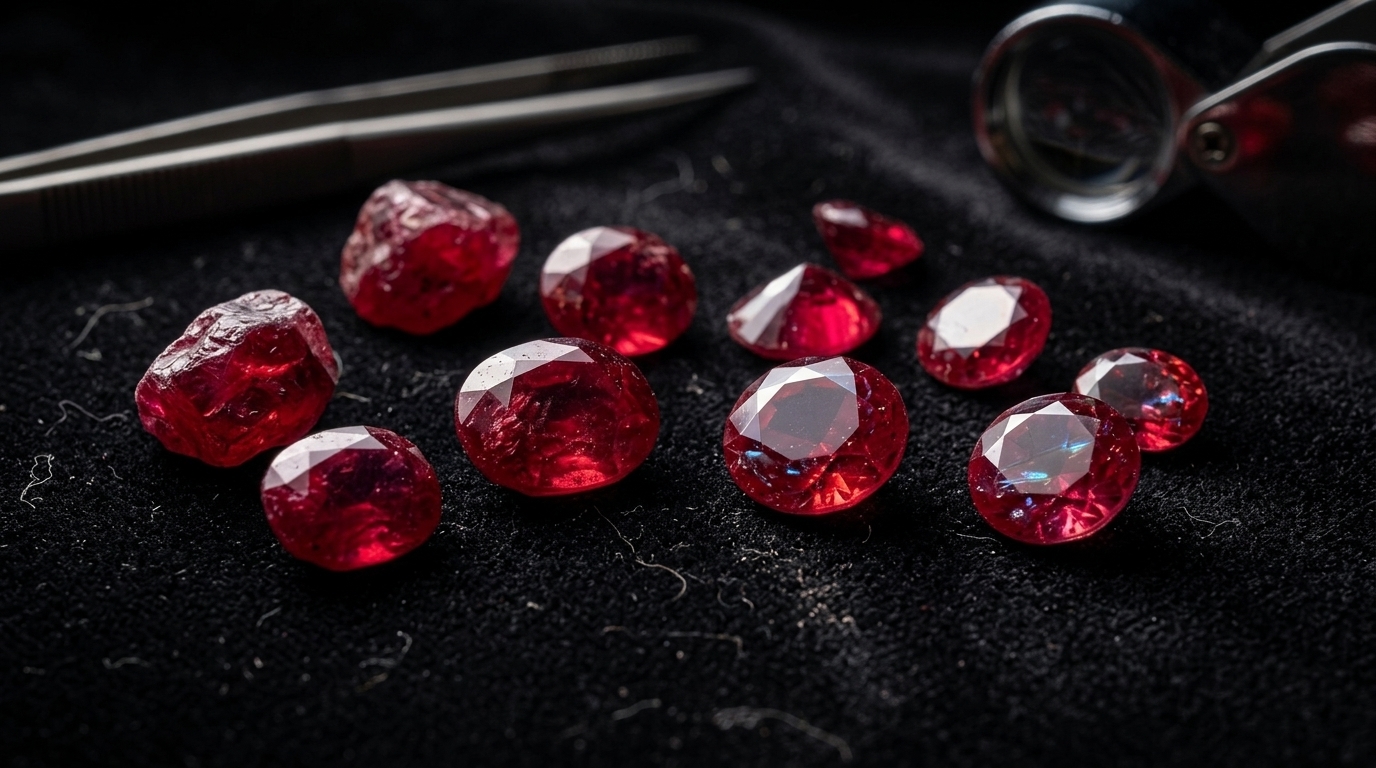
Why These Composite Stones Are So Problematic and Often Worthless
Ruby ranks 9 on the Mohs hardness scale, second only to diamond. It is tough and stands up well to daily wear. Lead glass is much softer, around 5 or 6 on the same scale. The filled fractures become weak points. A knock that a solid ruby would shrug off can chip or crack the glass. Once the glass is damaged, the fractures reappear as white or cloudy lines and the stone loses its appeal. Chemicals are another major issue. The glass reacts with acids and even common household substances. Lemon juice, vinegar, many cleaning products, and jeweler’s pickle solution can etch or cloud the filler. Ultrasonic cleaners and steam cleaners, routine tools in jewelry shops, can damage the glass. Heat from a torch during ring sizing or repair is risky. Many bench jewelers now refuse to work on these stones because the chance of ruining them is high. Value suffers for the same reasons. A fine natural or simply heat-treated ruby of good color and clarity can sell for hundreds or thousands of dollars per carat, sometimes much more for top material from classic sources. Lead-glass filled stones, when properly disclosed, trade at a small fraction of that price. Wholesale figures often fall in the range of a few dollars to a few tens of dollars per carat. There is almost no secondary market. Auction houses and serious dealers generally do not want them. Once the treatment is known, resale value collapses. The biggest practical problem for buyers is incomplete or missing disclosure. Some sellers describe the stones only as “treated ruby” or “clarity enhanced.” Others use vague language or say nothing at all. Buyers pay prices closer to those of better material and later discover they own a composite with limited durability and almost no lasting worth. Stories of people who paid hundreds or thousands for rings that later proved to be glass-filled are common in the trade. These stones are not synthetic. The host material is natural. They are not fakes in the sense of being glass or plastic. But they are composites, and that distinction matters for both durability and price. When a large share of the volume is glass, the piece is closer to a manufactured product than a traditional gemstone.
How to Spot Them and Protect Yourself When Buying
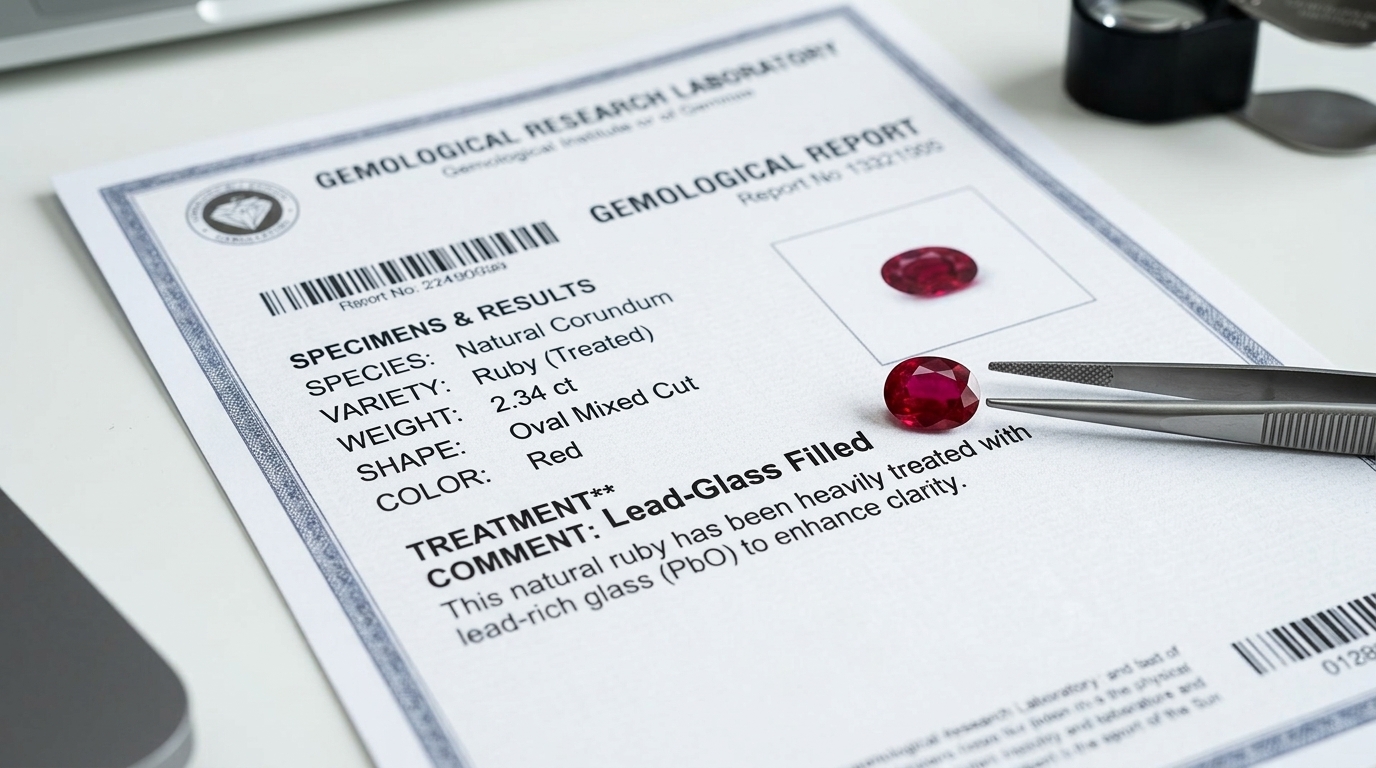
You do not need a full laboratory to catch most lead-glass filled rubies, though a report from a major lab is the safest route. Under a simple 10x loupe or microscope several signs stand out. The most reliable is the flash effect. When you tilt the stone under a strong light, filled fractures often show a bright blue flash in one direction and an orange flash in the other. This comes from thin-film interference at the boundary between glass and ruby. Natural fractures do not produce that neon color play. Gas bubbles are another giveaway. Spherical or elongated bubbles trapped inside the glass appear under magnification. Flow structures or swirling patterns in the filler can also be visible. Surface pits or areas where the glass has started to erode may look different in luster from the surrounding ruby. Specific gravity is often lower than the usual 4.00 for pure corundum because glass is less dense. Price and appearance together form a strong clue. A large, vivid, relatively clean “ruby” offered at a bargain price is almost always glass-filled. Real high-quality rubies in sizes of two carats and up are expensive and not common. If the deal seems too good, it usually is. Ask direct questions. Request a laboratory report from a respected lab such as GIA, SSEF, Gübelin, or similar. Those labs will state clearly if the stone is a composite or lead-glass filled and will not issue a standard ruby report for heavily filled material. Insist that any treatment be written on the receipt. If the seller becomes vague or refuses, walk away. For existing jewelry, avoid ultrasonic cleaners and harsh chemicals. Have any repairs done by a jeweler who understands the risks. If you already own a piece and suspect the treatment, a quick check by a gemologist can confirm it.
Conclusion
Lead-glass filled rubies exist because the treatment turns nearly worthless rough into something that looks attractive under display lights. The process is effective at improving appearance, but it creates a composite material that is fragile, chemically sensitive, and worth far less than solid natural or heat-treated ruby. The glass can cloud, crack, or leach with ordinary wear and cleaning, and the secondary market for these stones is essentially nonexistent. Buyers who understand the difference protect themselves. They look for clear disclosure, demand proper laboratory documentation, and treat suspiciously low prices as a warning rather than a bargain. When a stone is correctly described as composite or lead-glass filled and priced accordingly, it can serve as inexpensive colorful jewelry. When the treatment is hidden or downplayed, the buyer is left with something that may look good today but can fail tomorrow and holds almost no lasting value. The ruby market still offers beautiful natural and properly treated stones. The key is knowing what you are actually buying. A little knowledge about lead-glass filling saves money, disappointment, and the frustration of owning a “ruby” that is mostly glass held together by hope.
Questions Readers Often Ask
Are lead-glass filled rubies considered real rubies?
They start with natural corundum, so the host material is real. But because a significant amount of glass is added, major labs and trade groups classify them as composite rubies or lead-glass filled rubies rather than standard treated rubies. In heavily filled stones the glass can form a large part of the volume, so the finished piece is a manufactured composite.
Can a jeweler repair a ring set with a lead-glass filled ruby?
Many jewelers refuse the work. Heat from a torch, pickle solution used to clean metal, and ultrasonic cleaners can all damage or remove the glass. The stone may come out looking cloudy, cracked, or much worse than when it went in. Always tell the jeweler what the stone is before any work begins.
How much is a lead-glass filled ruby actually worth?
When properly disclosed, these stones typically sell for only a few dollars to a few tens of dollars per carat at wholesale or retail. That is a small fraction of the price of comparable-looking heat-treated natural rubies. They have almost no investment or resale value and are best viewed as inexpensive decorative material rather than precious gems.
Featured Products


Interested in our gemstones?
View Our Collection →Have a stone you want to check yourself?
Use our free gemology tools to identify, weigh, and care for gemstones.
Explore Free Gemstone Tools →