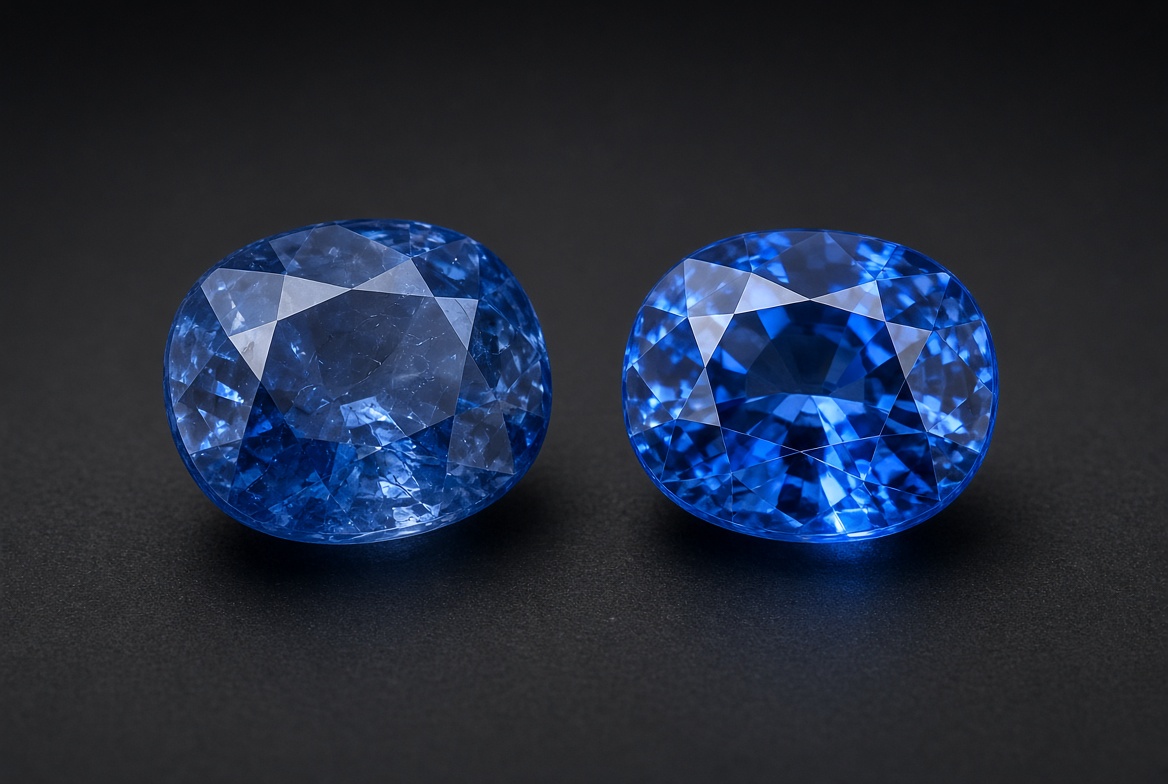
Natural gemstones form in the earth over millions of years. Synthetic (lab-grown) gems are made in factories and have the same chemical makeup. Both can look beautiful, but they differ in origin, rarity, price, and long-term value. Simple tests and lab reports help you tell them apart so you buy with confidence
What “Natural” and “Synthetic” Actually Mean
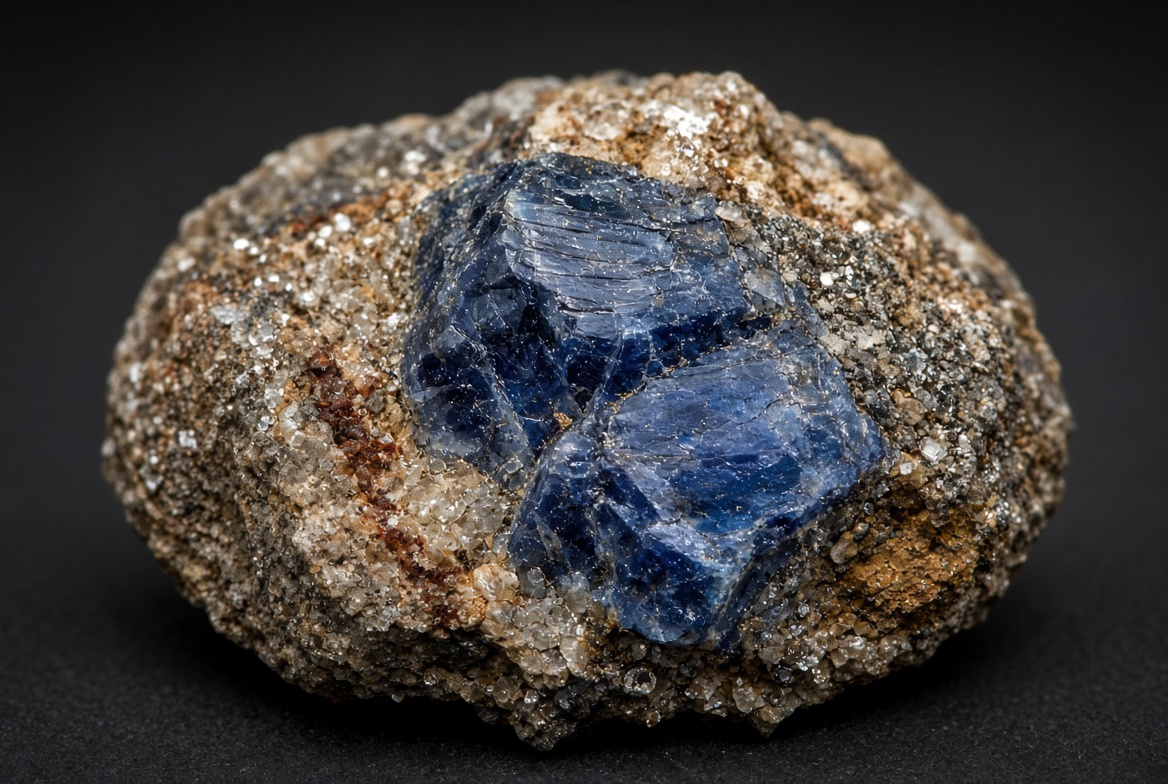
A natural gemstone is created by the earth. Heat, pressure, and time deep underground (or in some cases near the surface) slowly form crystals of ruby, sapphire, emerald, diamond, spinel, and other stones. No human intervention is involved in their creation. A synthetic gemstone is made by people in a laboratory or factory. Scientists recreate the same chemical composition and crystal structure as the natural stone. The result is a real ruby, real sapphire, or real diamond in terms of chemistry and physics — it is not glass or plastic. The difference is in the origin one grew in the ground, the other grew in a controlled environment. This distinction is important. “Synthetic” does not mean fake. A lab-grown diamond is still a diamond. A flame-fusion ruby is still corundum. The word “synthetic” simply tells you how and where it was formed.
Lab-Grown vs Natural – The Practical Differences
Natural stones are limited by what the earth produces. Fine, untreated material from classic sources is scarce. Lab-grown stones can be produced on demand, so supply is much larger.Price Lab-grown gems usually cost significantly less than comparable natural stones of the same size and quality. The gap is especially large in diamonds and in larger sizes of sapphire and emerald.Value over time Natural gemstones, especially those with good provenance or untreated status, tend to hold value better and can appreciate. Most lab-grown stones are bought for beauty and wear rather than long-term investment. Resale value is typically much lower.Inclusions and growth features Natural stones often show natural inclusions — tiny crystals, silk, fingerprints, or growth patterns that formed over geological time. Lab-grown stones may be cleaner, or they may show distinctive growth lines, metallic flux residues, or other features that point to laboratory origin.Emotional and cultural weight Many buyers still prefer natural stones because of the story: a crystal that formed millions of years ago feels different from one made last year. Other buyers are happy with lab-grown material because it offers larger size or higher clarity for the same budget, and because it avoids certain mining concerns.
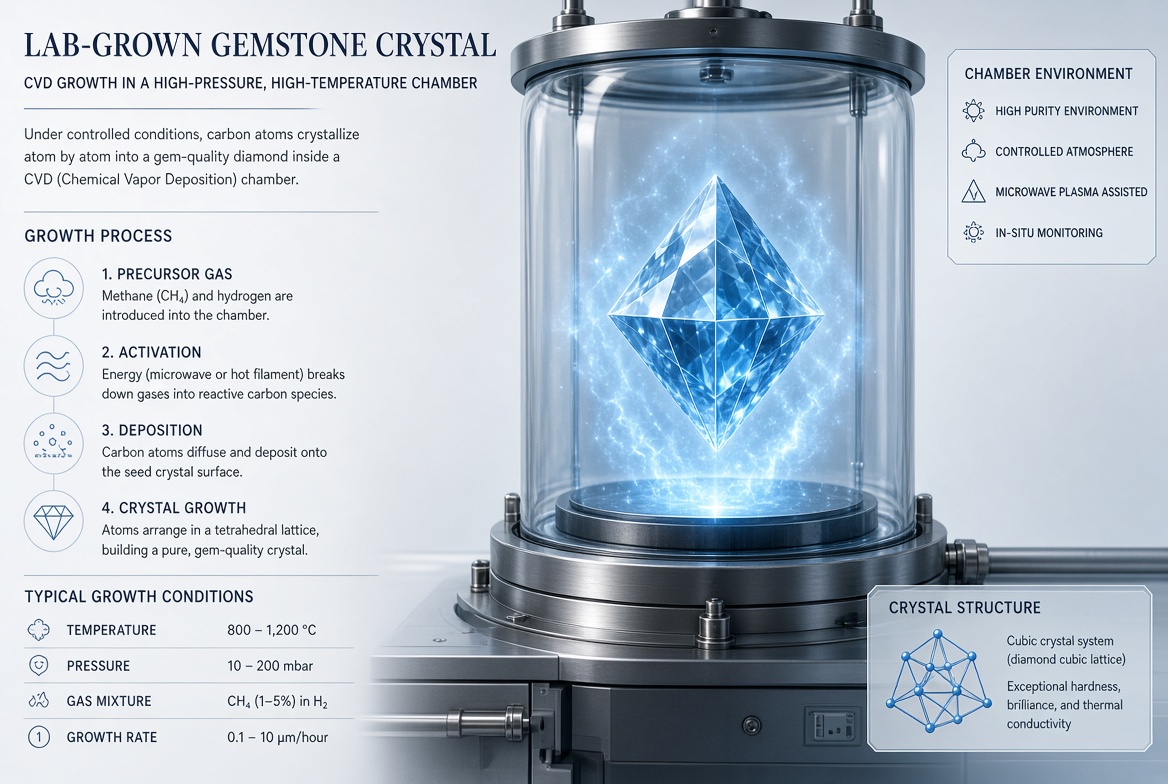
Are Lab Diamonds Real?
NO. Lab-grown diamonds are not real diamonds, But they have the same chemical composition (pure carbon), the same crystal structure, the same hardness (10 on the Mohs scale), and the same optical properties as natural diamonds. They are not cubic zirconia, moissanite, or glass. Those are simulants materials that only look like diamond. Lab diamonds are diamonds that were grown in a lab instead of the earth. The main differences are origin, price, and often the presence of specific growth marks or residual metals that gemological labs can detect. When a lab diamond is properly disclosed, it is an honest product. Problems arise only when a lab-grown stone is sold as natural.
How to Tell Synthetic from Natural (Synthetic Gemstone Tests)
Most people cannot reliably tell natural from lab-grown by eye alone, especially with high-quality material. Here are the practical ways professionals and careful buyers use: Gemological laboratory report The most reliable method. Reputable labs (GIA, SSEF, Gübelin, IGI, GRS, and others) can determine origin for diamonds, rubies, sapphires, emeralds, and many other stones. A report that says ,natural or laboratory-grown is the strongest evidence. Magnification and inclusions under a microscope, natural stones often show natural mineral inclusions, silk, or irregular growth. Certain synthetics show curved growth lines (common in flame-fusion corundum), gas bubbles, or flux residues. These features require experience to interpret correctly. Advanced testing Labs use spectroscopy, UV fluorescence patterns, and other instruments to detect growth methods (HPHT or CVD for diamonds, flux or hydrothermal for emeralds and other stones). These tests are beyond home equipment. What does not work reliably Simple “fog tests,” scratch tests, or cheap electronic diamond testers can be misleading. Some simulants and some synthetics pass basic testers. Visual appearance alone is also not enough when the stone is well made. If a seller cannot provide a report from a recognized lab for a higher-value stone, treat origin claims with caution.
Why the Difference Matters When You Buy
Ethical sellers disclose whether a stone is natural or laboratory-grown. Misrepresenting a synthetic stone as natural is fraud. Clear disclosure protects both buyer and seller.Price fairness Natural and lab-grown stones of similar appearance should not carry the same price. Knowing the origin helps you judge whether the asking price makes sense.Future expectations If you want a stone that is more likely to hold value or that carries a geological story, natural is the better choice. If you want maximum size and visual impact for a given budget and are comfortable with laboratory origin, lab-grown can be a practical option.Jewelry and daily wear Both natural and lab-grown stones of the same mineral can be equally durable. A lab-grown sapphire is still sapphire (hardness 9). A lab-grown diamond is still diamond (hardness 10). Setting, care, and lifestyle matter more than origin for everyday durability.
Practical Advice for Buyers
Decide what matters most to you: rarity and story, or size and price. For any stone of significant value, ask for a laboratory report that clearly states origin. Be wary of vague terms such as “created,” “cultured,” or “eco-friendly” without clear disclosure of laboratory growth. Remember that treatment (heating, oiling, etc.) is a separate issue from origin. A natural stone can still be treated, and a lab-grown stone can also receive treatments. Buy from sellers who answer questions directly and provide documentation. Understanding the difference between synthetic and natural gemstones does not make one automatically better than the other. It simply lets you choose with open eyes whether you want a piece of geological history or a beautifully made laboratory crystal that fits your budget and style.
Questions Readers Often Ask
Are lab-grown diamonds considered real diamonds?
No, Lab-grown diamonds have the same chemical composition, crystal structure, and physical properties as natural diamonds. But they are not a real diamonds because were grown in a laboratory rather than formed in the earth.
an an ordinary person reliably test if a gemstone is synthetic or natural at home?
Usually not with confidence. Basic visual checks and cheap testers can be misleading. The most reliable method is a report from a recognized gemological laboratory that examines origin.
do natural gemstones usually cost more than lab-grown ones of similar appearance?
Natural stones are limited by what nature produces and by mining costs. Fine untreated material is scarce. Lab-grown stones can be manufactured in larger quantities, so their price is generally lower. Rarity and origin are major reasons for the price difference.
Featured Products
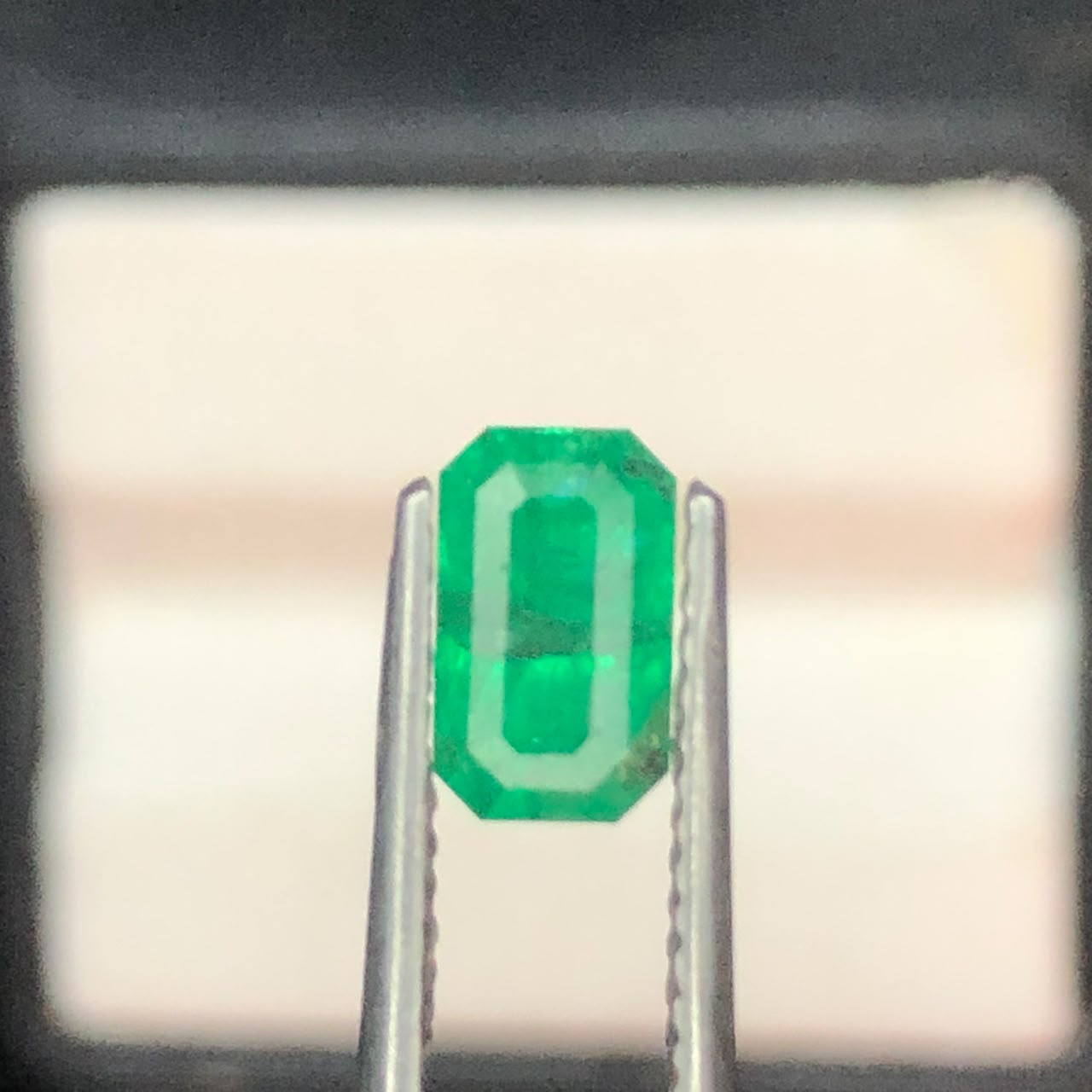
Interested in our gemstones?
View Our Collection →Have a stone you want to check yourself?
Use our free gemology tools to identify, weigh, and care for gemstones.
Explore Free Gemstone Tools →